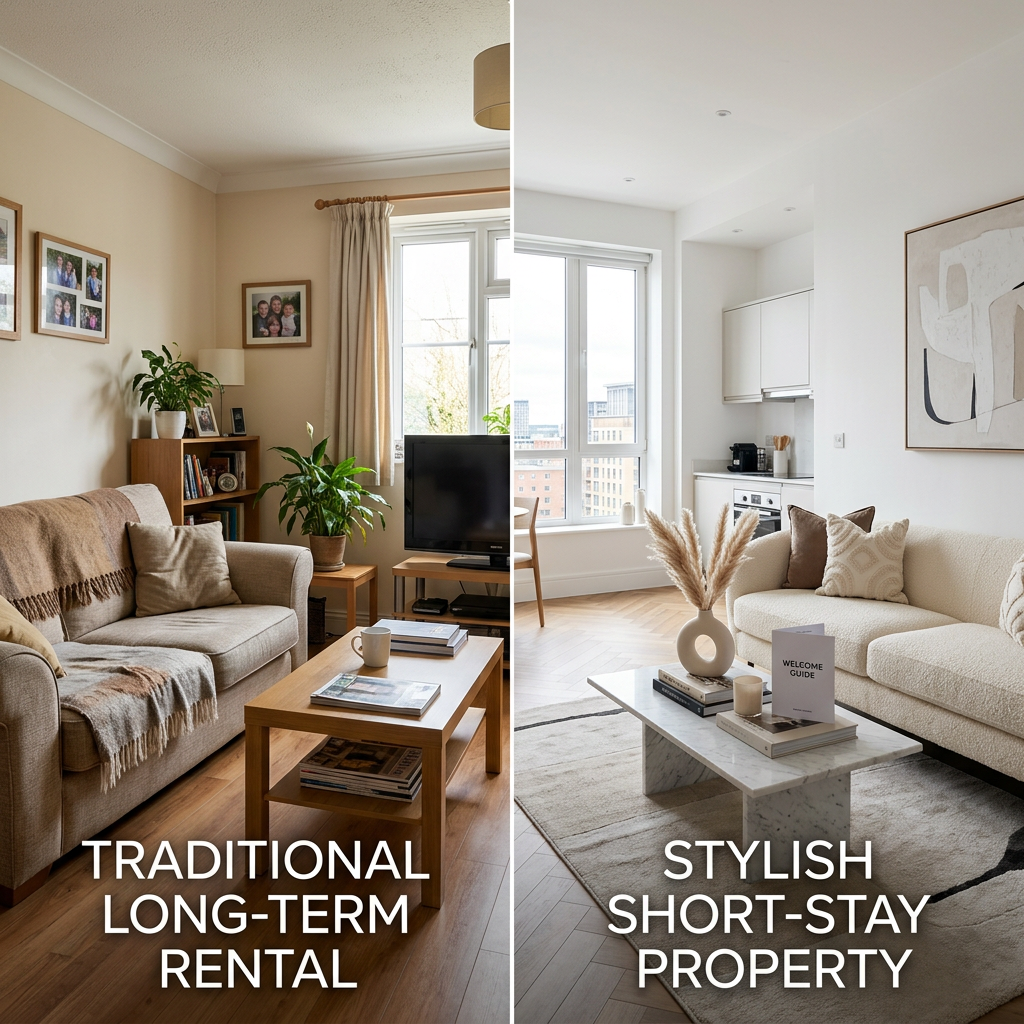
The Short Stay vs Long Term Decision
For Sydney property owners, the choice between short-term rental accommodation (STRA) and traditional long-term leasing is one of the most important financial decisions. On the surface, short-stay nightly rates appear much higher than monthly rents. But there are real costs and risks that must be factored in.
The Math: Comparing Annual Income
Let's work through a real Sydney example. Consider a 2-bedroom apartment in a desirable inner-city location:
- Long-term rental: $500/week = $26,000/year
- STRA nightly rate: $200/night, 70% annual occupancy
At first glance, the STRA math looks compelling: $200 × 70% × 365 = $51,100. But this ignores real costs:
- Professional cleaning between guests: $50-150 per turnover × 100 turnovers = $7,500-15,000
- STRA-appropriate insurance (2-3x cost of standard landlord insurance): $2,000-4,000
- Property management platform fees (7-12% of revenue): $3,500-6,000
- Maintenance and minor repairs (higher due to turnover): $2,000-4,000
- Water, utilities, internet (included in STRA, not in long-term): $3,000-5,000
- Contingency for vacancy/damage: $2,500-5,000
Net STRA income: $51,100 - $20,500-39,000 = $12,100-30,600
The Bottom Line
Short-stay rental can generate strong returns, but only in the right locations with active management and proper planning. Long-term leasing offers lower returns but greater predictability, simplicity, and lower operational burden. The best choice depends on your property's location, your available time and expertise, and your financial goals and risk tolerance. Run the numbers for your specific property before deciding.